
Golang的关键字defer的使用方法
怎么入门Golang编程?需要学习哪些知识点?这是新手们刚接触编程时常见的问题;下面golang学习网就来给大家整理分享一些知识点,希望能够给初学者一些帮助。本篇文章就来介绍《Golang的关键字defer的使用方法》,涉及到defer、关键字,有需要的可以收藏一下
核心思想
在defer出现的地方插入了指令CALL runtime.deferproc,在函数返回的地方插入了CALL runtime.deferreturn。goroutine的控制结构中,有一张表记录defer,调用runtime.deferproc时会将需要defer的表达式记录在表中,而在调用runtime.deferreturn的时候,则会依次从defer表中“出栈”并执行
如果有多个defer,调用顺序类似栈,越后面的defer表达式越先被调用
defer链
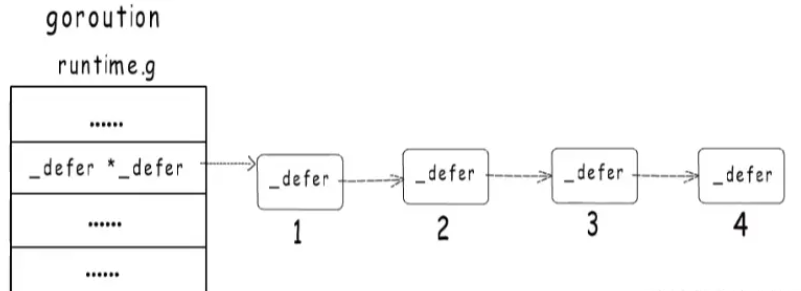
defer信息会注册到链表,当前执行的 goroutine 持有这个链表的头指针,每个 goroutine 都有一个对应的结构体struct G,其中有一个字段指向这个defer链表头
type g struct {
	// Stack parameters.
	// stack describes the actual stack memory: [stack.lo, stack.hi).
	// stackguard0 is the stack pointer compared in the Go stack growth prologue.
	// It is stack.lo+StackGuard normally, but can be StackPreempt to trigger a preemption.
	// stackguard1 is the stack pointer compared in the C stack growth prologue.
	// It is stack.lo+StackGuard on g0 and gsignal stacks.
	// It is ~0 on other goroutine stacks, to trigger a call to morestackc (and crash).
	stack       stack   // offset known to runtime/cgo
	stackguard0 uintptr // offset known to liblink
	stackguard1 uintptr // offset known to liblink

	_panic       *_panic // innermost panic - offset known to liblink
    // _defer 这个字段指向defer链表头
	_defer       *_defer // innermost defer
    ...
}
新注册的defer会添加到链表头,所以感觉像是栈那样先进后出的调用:
源码分析
deferproc一共有两个参数,第一个是参数和返回值的大小,第二个是指向funcval的指针
// Create a new deferred function fn with siz bytes of arguments.
// The compiler turns a defer statement into a call to this.
//go:nosplit
func deferproc(siz int32, fn *funcval) { // arguments of fn follow fn
    // 获取当前goroutine
	gp := getg()
	if gp.m.curg != gp {
		// go code on the system stack can't defer
		throw("defer on system stack")
	}
	// the arguments of fn are in a perilous state. The stack map
	// for deferproc does not describe them. So we can't let garbage
	// collection or stack copying trigger until we've copied them out
	// to somewhere safe. The memmove below does that.
	// Until the copy completes, we can only call nosplit routines.
    // 获取调用者指针
	sp := getcallersp()
    // 通过偏移获得参数
	argp := uintptr(unsafe.Pointer(&fn)) + unsafe.Sizeof(fn)
	callerpc := getcallerpc()

    // 创建defer结构体
	d := newdefer(siz)
	if d._panic != nil {
		throw("deferproc: d.panic != nil after newdefer")
	}
    // 初始化
	d.link = gp._defer
	gp._defer = d
	d.fn = fn
	d.pc = callerpc
	d.sp = sp
	switch siz {
	case 0:
		// Do nothing.
	case sys.PtrSize:
		*(*uintptr)(deferArgs(d)) = *(*uintptr)(unsafe.Pointer(argp))
	default:
		memmove(deferArgs(d), unsafe.Pointer(argp), uintptr(siz))
	}

	// deferproc returns 0 normally.
	// a deferred func that stops a panic
	// makes the deferproc return 1.
	// the code the compiler generates always
	// checks the return value and jumps to the
	// end of the function if deferproc returns != 0.
	return0()
	// No code can go here - the C return register has
	// been set and must not be clobbered.
}
// 以下是_defer结构体
// A _defer holds an entry on the list of deferred calls.
// If you add a field here, add code to clear it in freedefer and deferProcStack
// This struct must match the code in cmd/compile/internal/gc/reflect.go:deferstruct
// and cmd/compile/internal/gc/ssa.go:(*state).call.
// Some defers will be allocated on the stack and some on the heap.
// All defers are logically part of the stack, so write barriers to
// initialize them are not required. All defers must be manually scanned,
// and for heap defers, marked.
type _defer struct {
    // siz 记录defer的参数和返回值共占多少字节
    // 会直接分配在_defer后面,在注册时保存参数,在执行完成时拷贝到调用者参数和返回值空间
	siz     int32 // includes both arguments and results
	// started 标记是否已经执行
    started bool
    // heap go1.13优化,标识是否为堆分配
	heap    bool
	// openDefer indicates that this _defer is for a frame with open-coded
	// defers. We have only one defer record for the entire frame (which may
	// currently have 0, 1, or more defers active).
    // openDefer 是否是open defer,通过这些信息可以找到未注册到链表的defer函数
	openDefer bool
    // sp 记录调用者栈指针,可以通过它判断自己注册的defer是否已经执行完了
	sp        uintptr  // sp at time of defer
    // pc deferproc的返回地址
	pc        uintptr  // pc at time of defer
    // fn 要注册的funcval
	fn        *funcval // can be nil for open-coded defers
    // _panic 指向当前的panic,表示这个defer是由这个panic触发的
	_panic    *_panic  // panic that is running defer
    // link 链到前一个注册的defer结构体
	link      *_defer

	// If openDefer is true, the fields below record values about the stack
	// frame and associated function that has the open-coded defer(s). sp
	// above will be the sp for the frame, and pc will be address of the
	// deferreturn call in the function.
    // 通过这些信息可以找到未注册到链表的defer函数
	fd   unsafe.Pointer // funcdata for the function associated with the frame
	varp uintptr        // value of varp for the stack frame
	// framepc is the current pc associated with the stack frame. Together,
	// with sp above (which is the sp associated with the stack frame),
	// framepc/sp can be used as pc/sp pair to continue a stack trace via
	// gentraceback().
	framepc uintptr
}
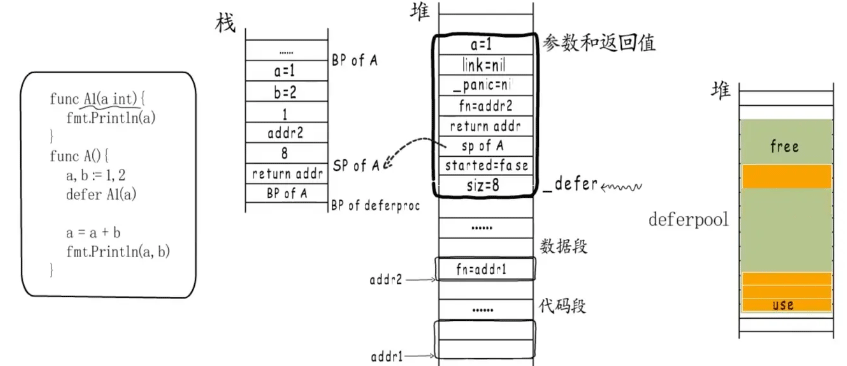
defer将参数注册的时候拷贝到堆上,执行时再(将参数和返回值)拷贝回栈上
go会分配不同规格的_defer pool,执行时从空闲_defer中取一个出来用,没有合适的再进行堆分配。用完以后再放回空闲_defer pool。以避免频繁的堆分配和回收
优化
go1.12中defer存在的问题:
- defer信息主要存储在堆上,要在堆和栈上来回拷贝返回值和参数很慢
- defer结构体通过链表链起来,而链表的操作也很慢
go1.13中defer的优化:
- 减少了defer信息的堆分配。再通过deferprocStack将整个defer注册到defer链表中
- 将一般情况的defer信息存储在函数栈帧的局部变量区域
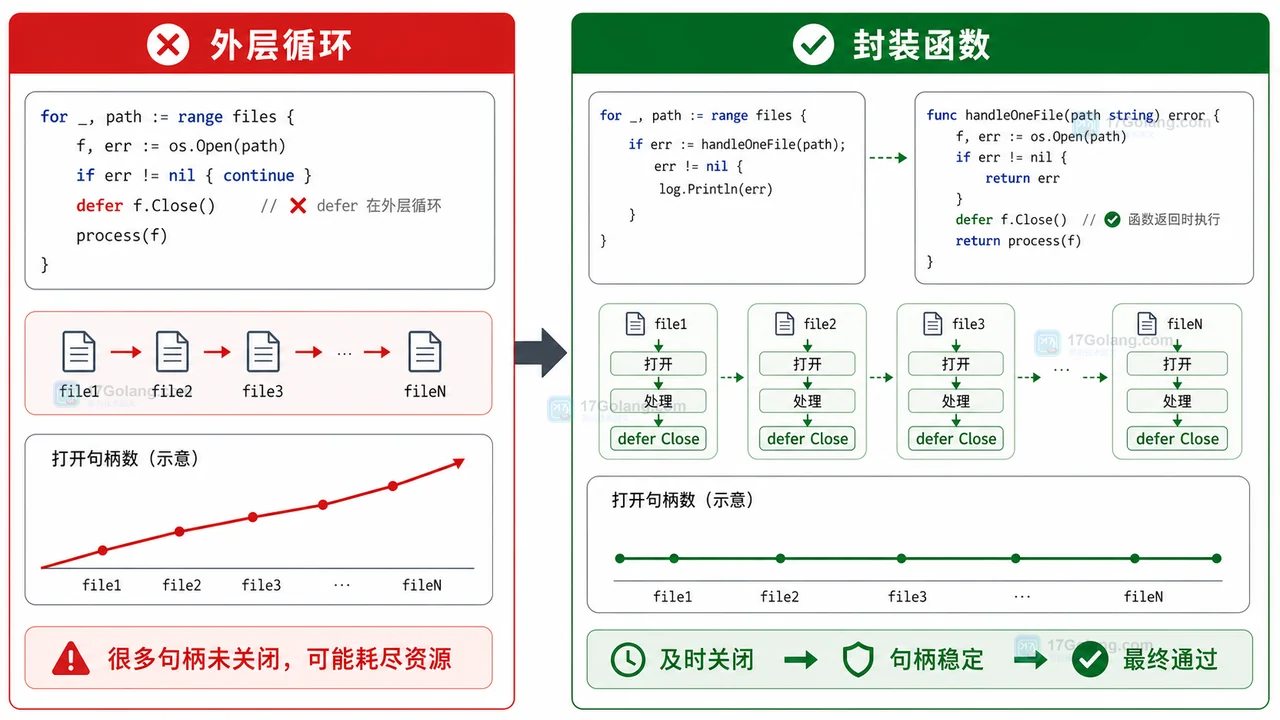
- 显示循环或者是隐式循环的defer还是需要用到go1.12中defer信息的堆分配
- 官方给出的性能提升是30%
go1.14中defer的优化:
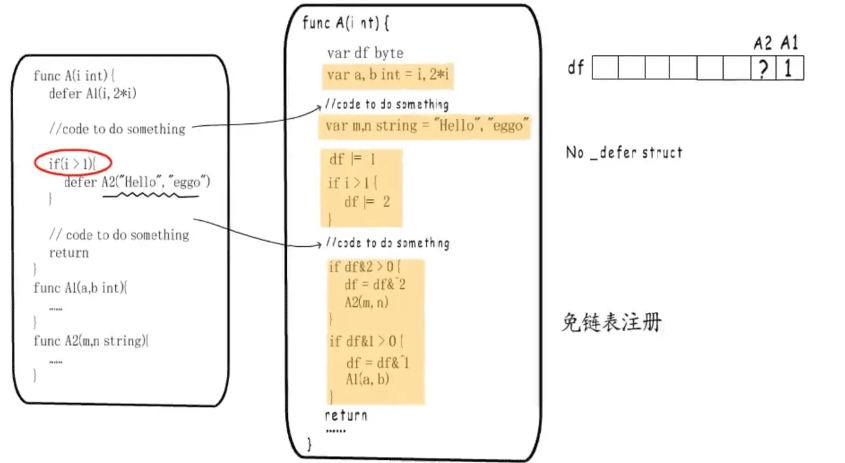
- 在编译阶段插入代码,把defer函数的执行逻辑展开在所属函数内,避免创建defer结构体,而且不需要注册到defer链表。称为 open coded defer
- 与1.13一样不适用于循环中的defer
- 性能几乎提升了一个数量级
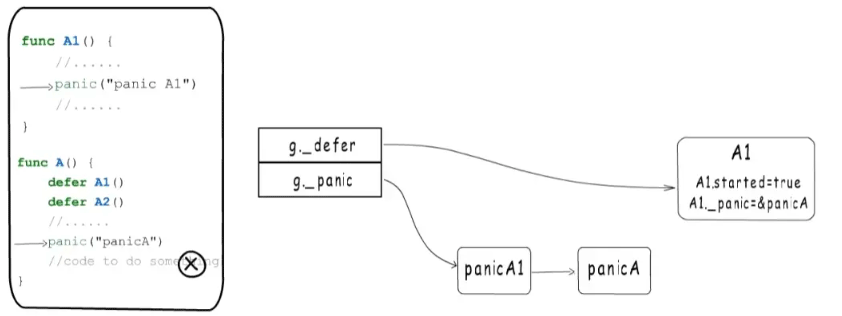
- open coded defer 中发生panic 或 调用runtime.Goexit(),后面未注册到的defer函数无法执行到,需要栈扫描。defer结构体中就多添加了一些字段,借助这些字段可以找到未注册到链表中的defer函数
结果就是defer变快了,但是panic变慢了
defer添加了局部变量去判断是否需要执行,需要执行的话就将标识df对应的位上或一下,如果是有条件的defer,需要根据具体条件去或df
deferprocStack
// deferprocStack queues a new deferred function with a defer record on the stack.
// The defer record must have its siz and fn fields initialized.
// All other fields can contain junk.
// The defer record must be immediately followed in memory by
// the arguments of the defer.
// Nosplit because the arguments on the stack won't be scanned
// until the defer record is spliced into the gp._defer list.
//go:nosplit
func deferprocStack(d *_defer) {
    // 获得当前 goroutine
	gp := getg()
	if gp.m.curg != gp {
		// go code on the system stack can't defer
		throw("defer on system stack")
	}
	// siz and fn are already set.
	// The other fields are junk on entry to deferprocStack and
	// are initialized here.
    // 初始化 _defer 信息
	d.started = false
	d.heap = false
	d.openDefer = false
	d.sp = getcallersp()
	d.pc = getcallerpc()
	d.framepc = 0
	d.varp = 0
	// The lines below implement:
	//   d.panic = nil
	//   d.fd = nil
	//   d.link = gp._defer
	//   gp._defer = d
	// But without write barriers. The first three are writes to
	// the stack so they don't need a write barrier, and furthermore
	// are to uninitialized memory, so they must not use a write barrier.
	// The fourth write does not require a write barrier because we
	// explicitly mark all the defer structures, so we don't need to
	// keep track of pointers to them with a write barrier.
	*(*uintptr)(unsafe.Pointer(&d._panic)) = 0
	*(*uintptr)(unsafe.Pointer(&d.fd)) = 0
	*(*uintptr)(unsafe.Pointer(&d.link)) = uintptr(unsafe.Pointer(gp._defer))
	*(*uintptr)(unsafe.Pointer(&gp._defer)) = uintptr(unsafe.Pointer(d))

	return0()
	// No code can go here - the C return register has
	// been set and must not be clobbered.
}
今天关于《Golang的关键字defer的使用方法》的内容就介绍到这里了,是不是学起来一目了然!想要了解更多关于golang的内容请关注golang学习网公众号!
 Golang中panic与recover的区别
- 上一篇
- Golang中panic与recover的区别

- 下一篇
- 利用go语言实现Git 重命名远程分支
-

- 受伤的冬瓜
- 太细致了,mark,感谢大佬的这篇文章,我会继续支持!
- 2023-01-31 03:53:18
-
- 风中的月饼
- 这篇技术文章出现的刚刚好,作者大大加油!
- 2023-01-30 21:59:19
-
- 爱撒娇的草莓
- 很有用,一直没懂这个问题,但其实工作中常常有遇到...不过今天到这,帮助很大,总算是懂了,感谢作者大大分享技术文章!
- 2023-01-28 20:29:50
-
- 可靠的帅哥
- 这篇文章真及时,太细致了,赞 ??,收藏了,关注博主了!希望博主能多写Golang相关的文章。
- 2023-01-25 20:37:30
-
- 生动的钢笔
- 很有用,一直没懂这个问题,但其实工作中常常有遇到...不过今天到这,看完之后很有帮助,总算是懂了,感谢作者分享技术文章!
- 2023-01-23 13:39:29
-
- 坚定的悟空
- 这篇博文真是及时雨啊,太细致了,很好,已收藏,关注博主了!希望博主能多写Golang相关的文章。
- 2023-01-17 23:26:20
-
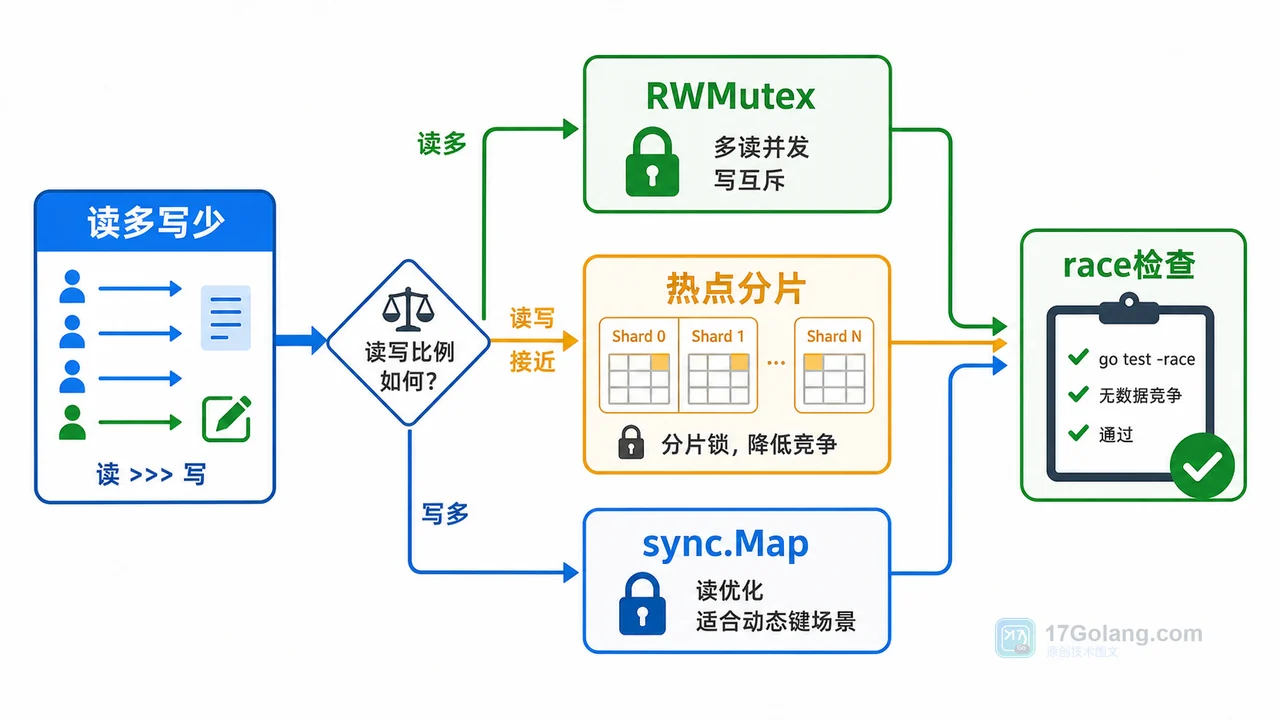
- Golang · Go教程 | 1天前 | map · 并发安全 · RWMutex · sync.Map · Go教程 · 并发安全 RWMutex sync.Map Go map并发读写 go test race
- Go map 并发读写崩溃怎么办:从复现报错到 RWMutex 修复的完整流程
- 272浏览 收藏
-
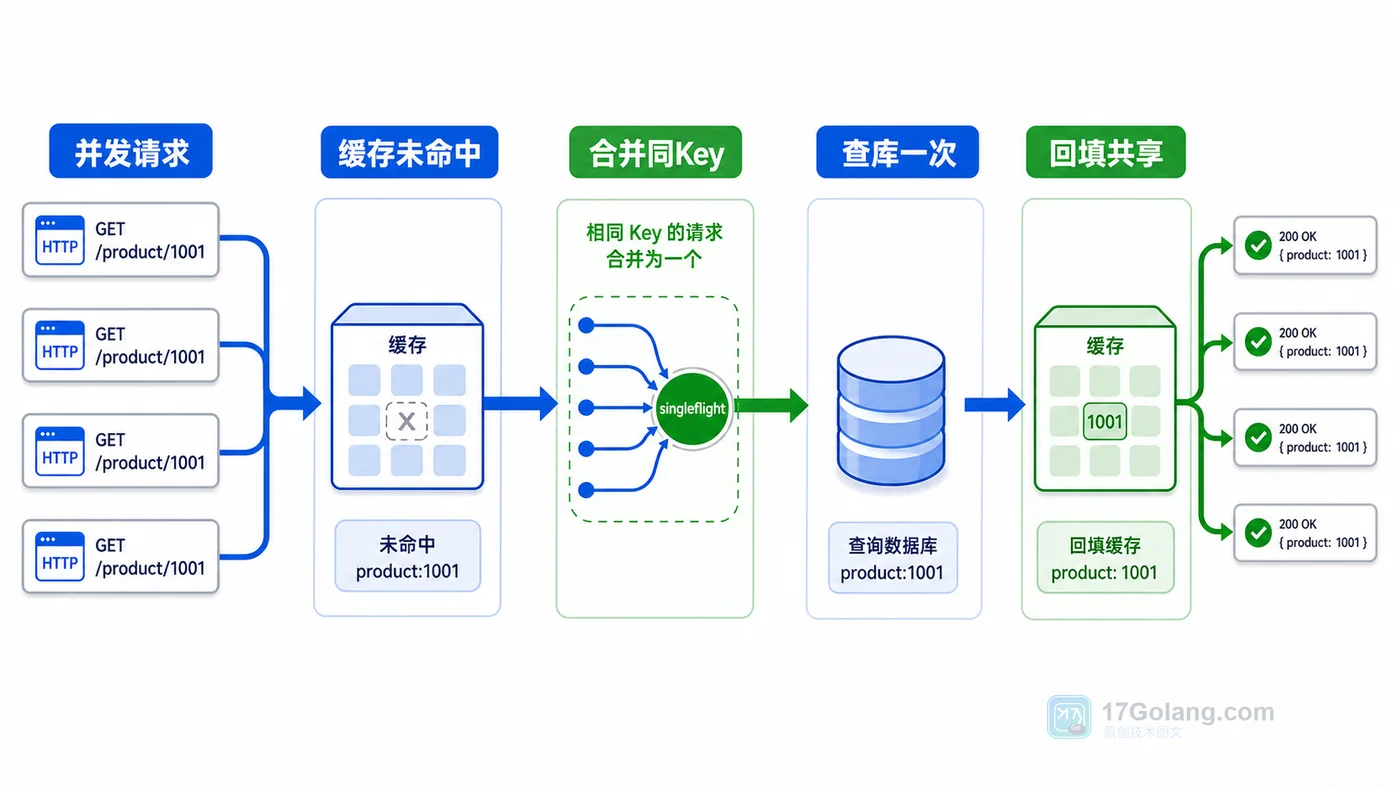
- Golang · Go教程 | 3天前 | singleflight · 并发控制 · Go教程 · 缓存治理 · 接口优化 · Go 并发请求 缓存击穿 singleflight 缓存回填
- Go singleflight 防缓存击穿实战:相同请求只查一次数据库
- 114浏览 收藏
-

- 前端进阶之JavaScript设计模式
- 设计模式是开发人员在软件开发过程中面临一般问题时的解决方案,代表了最佳的实践。本课程的主打内容包括JS常见设计模式以及具体应用场景,打造一站式知识长龙服务,适合有JS基础的同学学习。
- 543次学习
-

- GO语言核心编程课程
- 本课程采用真实案例,全面具体可落地,从理论到实践,一步一步将GO核心编程技术、编程思想、底层实现融会贯通,使学习者贴近时代脉搏,做IT互联网时代的弄潮儿。
- 516次学习
-

- 简单聊聊mysql8与网络通信
- 如有问题加微信:Le-studyg;在课程中,我们将首先介绍MySQL8的新特性,包括性能优化、安全增强、新数据类型等,帮助学生快速熟悉MySQL8的最新功能。接着,我们将深入解析MySQL的网络通信机制,包括协议、连接管理、数据传输等,让
- 500次学习
-

- JavaScript正则表达式基础与实战
- 在任何一门编程语言中,正则表达式,都是一项重要的知识,它提供了高效的字符串匹配与捕获机制,可以极大的简化程序设计。
- 487次学习
-

- 从零制作响应式网站—Grid布局
- 本系列教程将展示从零制作一个假想的网络科技公司官网,分为导航,轮播,关于我们,成功案例,服务流程,团队介绍,数据部分,公司动态,底部信息等内容区块。网站整体采用CSSGrid布局,支持响应式,有流畅过渡和展现动画。
- 485次学习
-

- ljg-skills
- ljg-skills 是李继刚开源的 AI 技能与提示词集合,面向大模型使用者整理了一批可复用的 prompt、角色设定和任务技能模板,适合用于学习提示词设计、搭建个人 AI 工作流和沉淀团队常用智能体能力。
- 318次使用
-

- MELO音乐
- MELO音乐是一站式AI视频与音乐制作助手,对标suno, udio的高品质体验。提供伴奏生成、原创写词、无损导出、哼唱识曲、混音变声等全套音频与短视频编辑工具。无论是流行Kpop、电音说唱、民谣古风、摇滚儿歌还是商用轻音乐,MELO为你免费谱曲,轻松做同款!
- 335次使用
-

- UniScribe
- UniScribe 是一款 AI 音视频转文字与内容整理工具,支持上传音频、视频文件或粘贴 YouTube 链接,自动生成转写文本、摘要、思维导图和关键问题,并支持多格式导出,适合会议记录、课程学习、访谈整理和内容创作复盘。
- 303次使用
-

- 剧云
- 剧云是专业中文剧本创作平台,安全稳定运行十余年,集成AI编剧、剧本医生审核、人物小传、剧情关系图、大纲编写、多人协作、Word导入导出、版权管控功能,数据安全防护,轻松高效创作剧本。
- 479次使用
-

- 万象有声
- 万象有声,一个专为有声创作者打造的新一代智能有声内容创作平台。平台提供专业的智能拆章、智能画本编辑、AI配音、AI生成音效、后期制作、智能对轨、智能审听等有声创作全流程工具,可以帮助创作者高效、低成本创作出引人入胜的有声作品。立即体验,让有声书制作更简单!
- 465次使用
-
- golang中的defer函数理解
- 2022-12-22 366浏览
-
- 一文搞懂Go语言中defer关键字的使用
- 2022-12-30 485浏览
-
- GolangDefer基础操作详解
- 2022-12-22 444浏览
-
- 详解golang中的闭包与defer
- 2023-01-07 461浏览
-
- Go iota关键字与枚举类型实现原理
- 2023-01-07 273浏览


